Guests can tell when a listing is someone’s daily driver: a hoodie on the seat, a charging brick
in the cup holder, a wet umbrella behind the passenger seat. You can rent out your personal car
without photographing your Tuesday commute.
Prices change — check Amazon before you buy.
Photos vs real life
The cabin has two jobs. They fight each other.
Listing photos want empty seats, a clean trunk well, and nothing that says “this is also the school run.” A booked trip wants a place for the guest’s junk so it does not become your junk in the next photo set. Turo’s page about listing photos is about light, angles, and a car that looks ready. A pile of organizers in the back seat photographs as clutter — the opposite of ready.
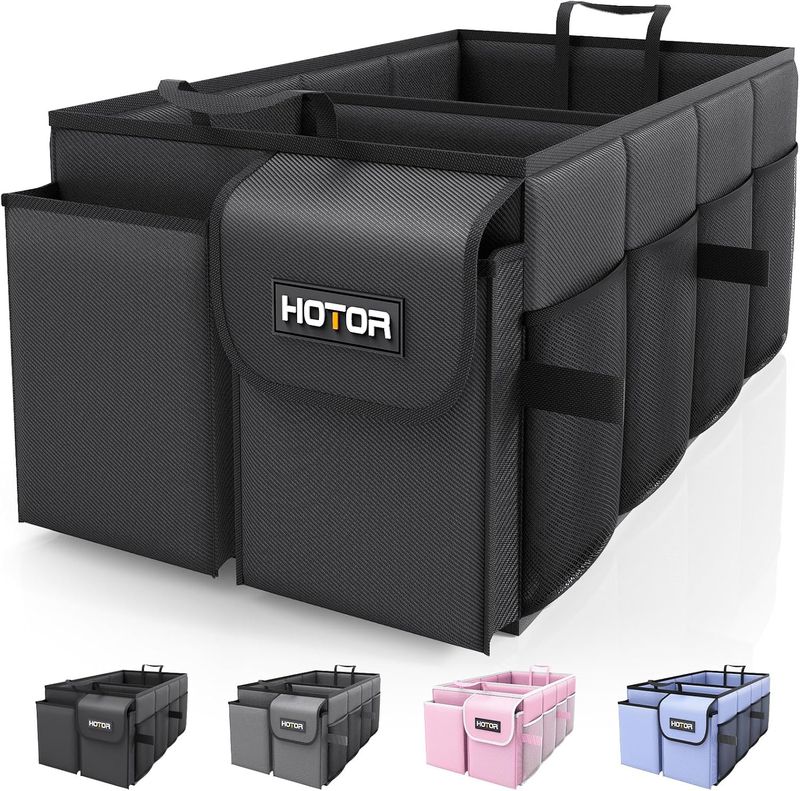
One foldable trunk bin is enough for most personal cars. Chargers the last guest left, snacks, a wet umbrella, the cheap USB cable you are willing to lose — they go in the trunk, in the bin, with a lid you can straighten in twenty seconds. If the bin looks sloppy on turnover day, pull it for the listing or re-list photos. Do not “style” it with snacks you bought for the shot.
Do not fill the rear footwells with extra cubes, seat-back hammocks, and a second organizer “for the kids’ stuff.” That is how a Civic starts to look like a cargo van in the gallery. If you need that much storage, the car is still your closet. Empty the closet before you list.
What stays out
The cabin should look like a car someone can borrow, not a closet.
Remove the garage-door remote, the house key, the HOA hangtag with your address, and the registration if your state lets you store it out of sight in a way that is still legal to drive. That is a keys problem as much as a cabin problem.
Leave what a guest actually uses: the charger, the mount, the inflator note, a cheap cable. Those picks live on Gear. Shoot the listing the way List describes — ten real photos, empty seats — then put the bin back so the first trip does not explode across the upholstery.